Quick Facts Renting a Car in the Netherlands
We start with some quick facts about renting a car in the Netherlands.
| 🚗 Driving side | Right-hand side of the road |
| 🎂 Minimum rental age | Usually 21 years (varies by rental company) |
| ⚙️ Transmission | Manual cars are most common; automatics are available but should be booked early |
| 🚦 Speed limits | 30–50 km/h in towns, 80 km/h on many rural roads, 100 km/h on most motorways during the day |
| 🛣️ Road tolls | Almost all Dutch roads are toll-free |
| ⛽ Fuel | Petrol (gasoline) and diesel are widely available |
| 🔍 Best way to book | Compare rental companies in advance using DiscoverCars |
| 🅿️ Parking | Often paid in city centres; many towns offer Park & Ride (P+R) facilities |
| 🚲 Cyclists | Always watch carefully for cyclists, especially when turning or opening your car door |
| 🗺️ Navigation | Google Maps and Apple Maps work very well throughout the Netherlands |
| ✅ Road quality | Excellent, with clear signs |
Disclosure: This page contains affiliate links. If you make a purchase through one of these links, we may earn a small commission at no extra cost to you.
Renting a car in the Netherlands
Renting a car in the Netherlands is one of the best ways to discover the country. While the country has an excellent public transportation network, driving gives you the freedom to travel at your own pace. You can stop in small villages, spend the afternoon at the beach, or visit attractions that are difficult to reach by train. If you’re planning to explore several regions during your trip, a rental car often makes your journey much easier.
That doesn’t mean everyone needs one. If you’re only staying in Amsterdam for a few days, you’ll probably find that walking, cycling and public transportation are more convenient. Parking in the city centre is expensive, traffic can be busy and many hotels charge extra for parking. In that case, it often makes sense to enjoy the city without a car and rent one later if you’re planning to explore the rest of the country.
Fortunately, driving in the Netherlands is straightforward. Roads are well maintained, road signs are clear and distances between cities are relatively short. Even if you’ve never driven in Europe before, you’ll likely feel comfortable after a short time behind the wheel. With a little preparation, renting a car can become one of the highlights of your trip.
Is Renting a Car in the Netherlands Worth It?
Whether a rental car is worth the cost depends on your travel plans. If your itinerary includes Amsterdam, Rotterdam and Utrecht, public transportation is usually more than enough. Trains run frequently, city centres are compact and many attractions are within walking distance of a station. In those situations, a car often spends more time parked than on the road.
However, the picture changes once you leave the larger cities. Some of the country’s most beautiful places are much easier to reach by car. Think of the Veluwe, Kinderdijk, the beaches of Zeeland, South Limburg or family attractions such as the Efteling and Safaripark Beekse Bergen. Public transportation will still get you there, but journeys often involve one or more transfers and usually take longer.
A rental car also gives you much more flexibility. Instead of planning your day around train schedules, you can leave whenever you like, stop for lunch in a small village or make an unexpected detour if you discover an interesting place along the way. That freedom is one of the biggest reasons why many visitors choose to rent a car.
Another advantage is comfort. Travelling with suitcases, backpacks, strollers or shopping bags is much easier when everything stays in the trunk. Instead of carrying your luggage through busy stations, you simply load the car once and continue your journey whenever you’re ready.
When Should You Book?
If you already know you’ll need a rental car, it’s usually best to book as early as possible. Prices often increase as your travel dates get closer, especially during spring, summer and school holidays. Booking in advance also gives you a much wider choice of vehicles.
This is particularly important if you prefer an automatic transmission. In Europe, manual cars are still very common, so automatic vehicles are available in smaller numbers. During busy travel periods, they are often the first to sell out. Waiting until the last minute may leave you with fewer options or a significantly higher price.
Booking early also gives you more time to compare rental conditions. Two cars may look almost identical at first glance, but there can be important differences in insurance, mileage limits, fuel policies and the amount of the security deposit. Taking a few extra minutes to compare those details before booking can save you money and prevent unpleasant surprises when you collect your car.
Instead of visiting every rental company’s website separately, many travelers use a comparison platform. We recommend DiscoverCars because it compares offers from many well-known rental companies in one place. It also makes it easy to compare prices, customer reviews and rental conditions before making a reservation. Rather than choosing the cheapest option straight away, take a moment to check what’s included. A slightly higher daily rate can sometimes offer much better value.
Choosing the Right Car
It’s easy to underestimate how compact European cars can be. A vehicle that comfortably seats four adults doesn’t always have enough luggage space for four large suitcases, especially if you’re also travelling with a stroller or other bulky items.
For that reason, it’s worth thinking about luggage before choosing your car. If you’re travelling with children or planning a longer holiday, booking one size larger than you originally had in mind can make the trip much more comfortable. The difference in price is often relatively small, while the extra space can make a big difference during long driving days.
The roads in the Netherlands are generally narrow compared to those in North America, especially in older towns and city centres. A very large SUV isn’t necessary for most trips and can sometimes make parking more difficult. Fortunately, even compact cars are comfortable for longer journeys because distances within the Netherlands are relatively short.
Finally, pay attention to the number of doors, the amount of luggage space and whether the car has an automatic or manual transmission. These details are easy to overlook during the booking process, but they have a big impact on your comfort once your trip begins.

What Do You Need to Rent a Car?
Collecting your rental car is usually a quick process, provided you have the right documents with you. Most rental companies will ask for a valid driver’s license, your passport or ID card, your booking confirmation and a credit card in the name of the main driver.
One thing that surprises many travelers is the credit card requirement. In most cases, the rental company doesn’t simply use it to pay for the rental. Instead, they place a temporary hold on the card as a security deposit. The amount varies by company and vehicle, but it can range from a few hundred euros to well over €1,000 for premium cars.
Although some companies advertise rentals without a credit card, those bookings often come with extra conditions or limited availability. If you have a credit card, the pickup process is usually much smoother. Before you travel, it’s also worth checking that your card has enough available credit to cover both the rental cost and the security deposit.
Picking Up Your Rental Car at Schiphol Airport
If you’re arriving at Amsterdam Schiphol Airport, collecting your rental car is straightforward. After leaving the baggage claim area, simply follow the signs for Car Rental. The desks of the major rental companies are located together in Schiphol Plaza, the large arrivals hall where you’ll also find shops, restaurants and the entrance to the train station.
Once the paperwork is complete, a member of staff will explain where your car is parked. Depending on the rental company, you may walk to a nearby parking garage or take a short shuttle bus to an off-site location. Both options are clearly signposted, so it’s usually easy to find your way.
The entire process often takes between 20 and 45 minutes. During busy holiday periods, however, it can take a little longer. If several international flights arrive at the same time, queues at the rental desks are not unusual. Building a little extra time into your schedule helps you start your trip without feeling rushed.
If your flight is delayed, don’t panic. Rental companies track flight numbers if you entered them during the booking process. They know when your flight lands and will often hold your reservation if the delay is reasonable. If you’re facing a significant delay, it’s still a good idea to contact the rental company as soon as possible. That way, they know you’re on your way and are less likely to cancel your booking.
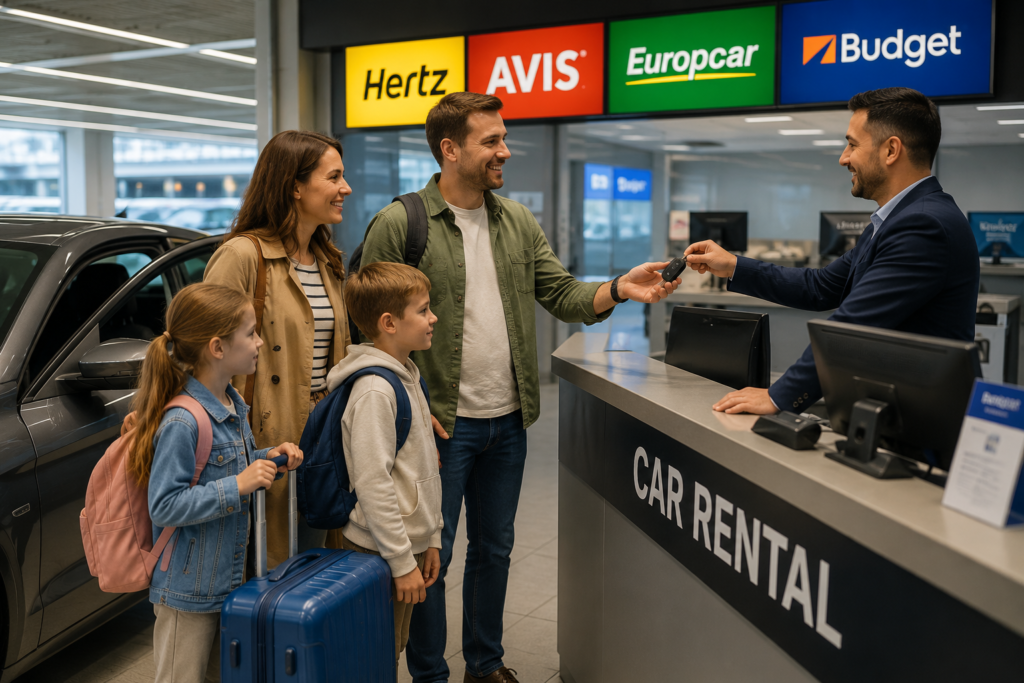
Before You Drive Away when renting a car in the Netherlands
Once you’ve reached your car, don’t be in a hurry to start driving. Spending five minutes checking the vehicle can save you a great deal of stress later.
Walk all the way around the car and look carefully for scratches, dents, cracked lights and damage to the wheels. Most rental companies provide a damage report showing any existing marks. Compare the report with the actual condition of the car and make sure everything you notice has already been recorded.
If you find damage that isn’t listed, tell a member of staff before leaving the parking area. They can update the report immediately. It only takes a few minutes and avoids any discussion when you return the vehicle.
It’s also a smart idea to take your own photos. Many experienced travelers photograph every side of the car, the roof if possible, the wheels and the windshield. A short video while slowly walking around the vehicle works even better because it captures the entire condition in one recording. Keep those photos until a few weeks after you’ve returned the car.
Before leaving, take a moment to familiarize yourself with the vehicle. Check where the headlights, windshield wipers and fuel cap are located. It’s much easier to figure everything out while you’re still parked than when you’re joining traffic for the first time.
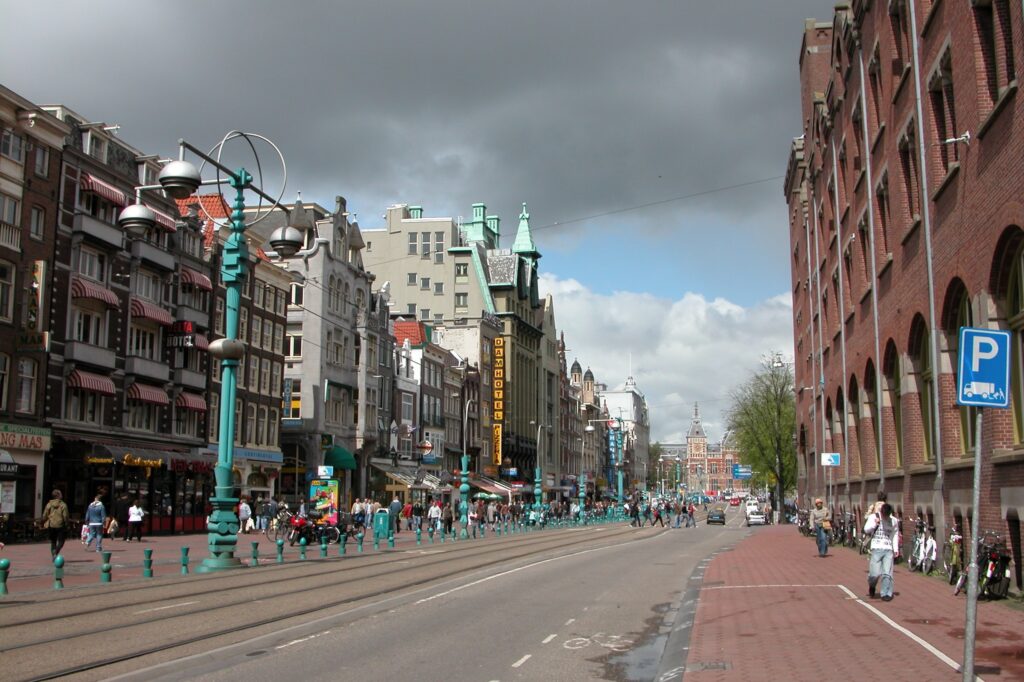
Understanding Car Rental Insurance
Insurance is often the most confusing part of renting a car. At first glance, two rental offers may seem almost identical, but the level of protection can be very different. That’s why it’s worth taking a few minutes to understand what’s included before confirming your booking.
Most rentals already include basic protection against damage and theft. However, this doesn’t mean you won’t have to pay anything if something happens. In many cases, the insurance comes with an excess, also known as a deductible. This is the maximum amount you may have to pay yourself if the car is damaged or stolen.
For example, imagine the deductible is €1,000 and you accidentally damage the front bumper. Even if the repair costs much more, you would normally only be responsible for the deductible. The insurance covers the remaining amount.
Because of this, many travelers choose additional coverage that reduces or removes the deductible altogether. Whether that’s worthwhile depends on your budget and how comfortable you are with the financial risk. In the next section, we’ll look at the different insurance options in more detail, explain what they usually cover and help you decide whether extra protection is worth paying for.
Should You Buy Extra Insurance when renting a car in the Netherlands?
When you book a rental car, you’ll often see several insurance options. At first, they can seem confusing because every rental company uses slightly different names. Fortunately, the idea behind them is usually the same. The more comprehensive the cover, the less you may have to pay if something goes wrong.
If your booking includes a high deductible, buying additional protection can offer peace of mind. Instead of worrying about paying hundreds or even thousands of euros after an accident, you know your financial risk is much lower. This can be especially reassuring if it’s your first time driving in another country or if you’re planning a longer road trip.
On the other hand, extra insurance isn’t always necessary. Some credit cards include rental car coverage, while certain travel insurance policies reimburse the deductible if you make a claim. Before purchasing additional cover, it’s worth checking what protection you already have. You may discover you’re insured for more than you expected.
Whichever option you choose, always read the terms carefully. Not every policy covers the same type of damage. For example, tyres, windscreens, mirrors and the underside of the car are sometimes excluded from standard coverage. Knowing this before you travel helps you make an informed decision instead of feeling pressured at the rental desk.
Don’t Feel Pressured at the Rental Desk
After a long flight, it’s common for rental companies to offer extra insurance before handing over the keys. The employee may explain the potential costs of damage and ask whether you’d like additional protection. For some travelers, this is the right choice. Others have already arranged suitable cover before their trip.
The important thing is to make that decision before you arrive. If you’ve already compared the options and know what your booking includes, you’ll feel much more confident during the pickup process. There’s no need to make a rushed decision while other customers are waiting behind you.
Take your time, ask questions if something isn’t clear and don’t agree to additional products simply because you feel under pressure. Most rental desk employees are doing their job, but the final decision is always yours.
Driving in the Netherlands for the First Time
Many visitors are surprised by how easy driving in the Netherlands actually is. Roads are generally in excellent condition, signs are clear and most destinations are well signposted. Even in larger cities, navigation apps work reliably and make it easy to find your way.
That said, driving here does feel different from driving in many other countries. Roads are often narrower, especially in older towns where streets were built centuries ago. You may also notice that cyclists are everywhere. In cities, they often have their own lanes and usually have priority in situations where drivers are expected to give way.
For that reason, it’s important to stay alert when turning at intersections or opening your car door after parking. Before stepping out, quickly check your mirrors for approaching cyclists. It’s a small habit that locals follow every day, and it helps prevent accidents.
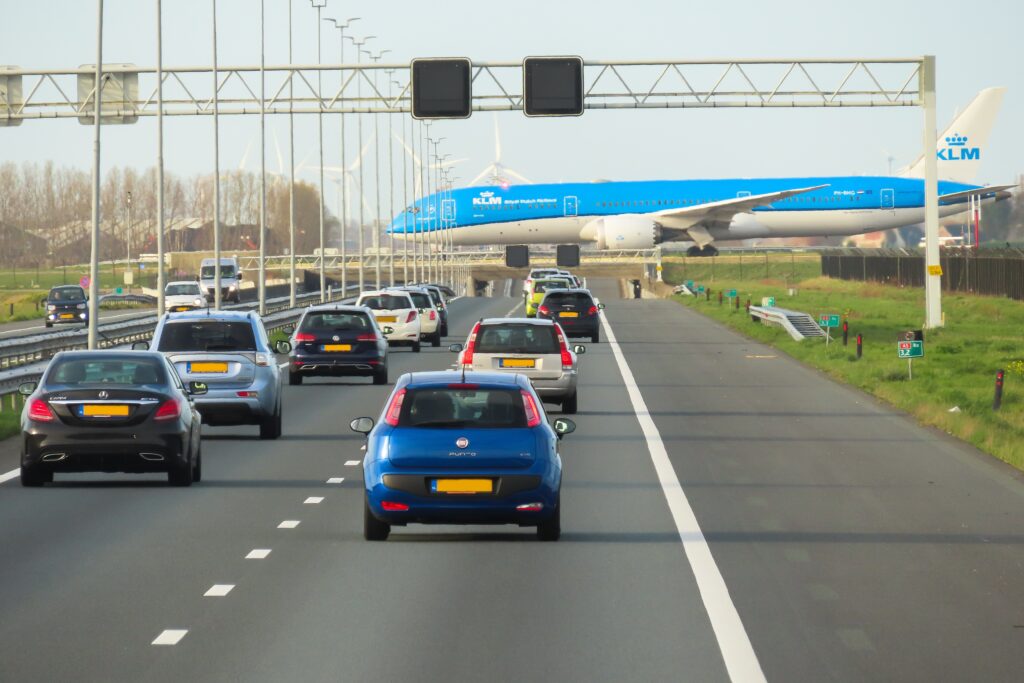
Outside the cities, driving becomes even more relaxed. Motorways are modern, traffic generally flows well and distances are short. You can drive from Amsterdam to Rotterdam in about an hour, while many popular attractions are less than two hours apart.
Speed Limits and Traffic Rules in the Netherlands
Speed limits in the Netherlands are clearly marked and are enforced by a large number of speed cameras. Unlike in some countries, these cameras are used extensively, so it’s best not to rely on other drivers to judge the correct speed.
On most motorways, the daytime speed limit is 100 km/h between 6:00 a.m. and 7:00 p.m. Outside those hours, many sections allow 130 km/h, although some roads remain at 100 or 120 km/h. Always follow the signs above or alongside the road, as they indicate the limit for that specific section.
In built-up areas, the limit is usually 50 km/h, while many residential neighbourhoods are restricted to 30 km/h. These lower-speed zones have become increasingly common throughout the country and are designed to improve safety for pedestrians and cyclists.
At intersections without traffic lights or priority signs, the Dutch right-hand priority rule applies. This means traffic approaching from the right has the right of way. If you see a yellow diamond-shaped priority sign, you are on the priority road and traffic from side roads must give way instead.
If traffic lights are operating, they determine who has the right of way. Drivers should never assume they may turn right on a red light. Unlike in some countries, turning right on red is not permitted in the Netherlands unless a specific sign explicitly allows it, which is extremely rare.
Using a handheld mobile phone while driving is prohibited, and seat belts are mandatory for everyone in the vehicle. Children must also use an appropriate child seat or booster seat until they meet the legal height requirements. If you’re travelling with young children, you can usually reserve a child seat when booking your rental car. However, availability is limited during busy periods, so it’s wise to arrange this in advance.
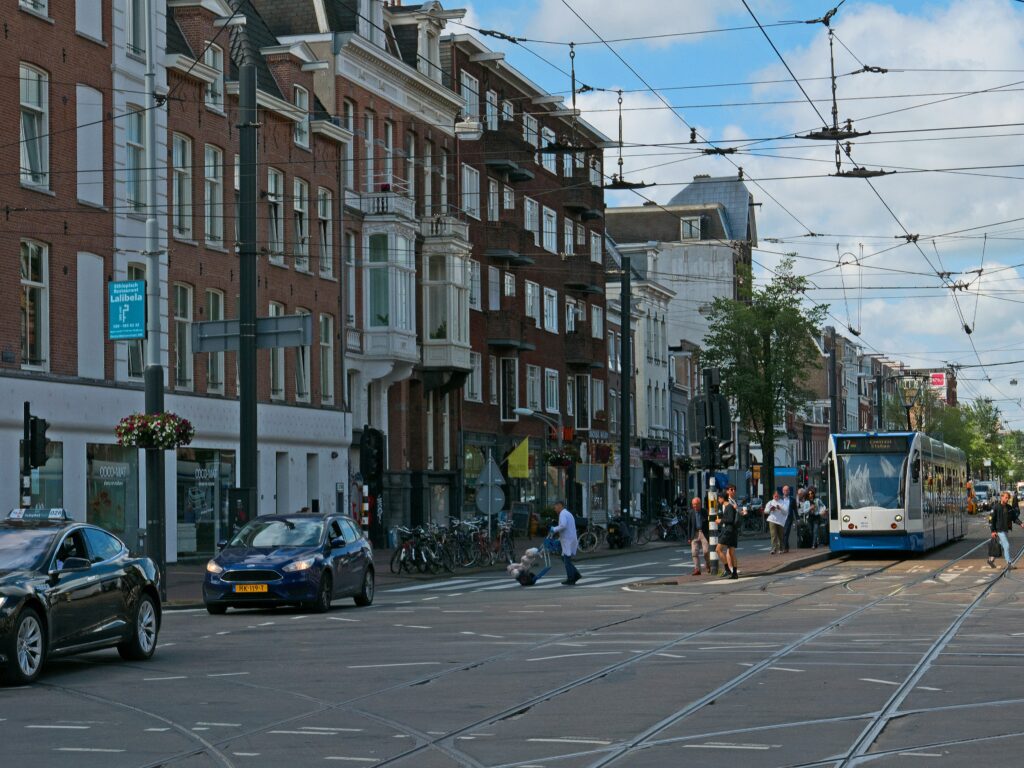
Parking in the Netherlands
Parking is one of the biggest differences you’ll notice while driving in the Netherlands. In smaller towns and villages, finding a parking space is usually straightforward. In larger cities, however, it can be more challenging and considerably more expensive.
Amsterdam is the best example. Street parking in the city centre is limited, and hourly rates are among the highest in Europe. Depending on the location, parking for an entire day can easily cost more than your rental car for that same day. If your accommodation is in the city centre, it’s worth checking the parking options before you arrive. Some hotels have their own parking garage, while others work with nearby public garages at a discounted rate.
Fortunately, many Dutch cities have Park and Ride (P+R) facilities on the outskirts. You park your car there and continue into the city by public transportation. In many cases, this is much cheaper than parking in the centre, and it also saves you from driving through busy city streets.
When parking on the street, always check the signs nearby. They explain whether parking is free, how long you may stay and during which hours payment is required. In many places, you pay at a parking meter by entering your license plate number instead of placing a ticket behind the windshield.
Paying for Parking
Most parking meters in the Netherlands accept debit cards and credit cards. Many also allow contactless payments with your phone or smartwatch. Cash payments are becoming less common, so it’s best not to rely on coins.
Parking apps are also widely used. Apps such as EasyPark allow you to start and stop your parking session from your phone, meaning you only pay for the time you actually use. If you plan to visit several cities during your trip, downloading a parking app in advance can make parking much easier.
If you’re staying overnight, ask your hotel about parking before you arrive. Some accommodations offer private parking, while others can recommend the nearest public garage. It’s a simple question that can save both time and money.
Fuel Policies Explained
Before collecting your rental car, it’s worth checking the fuel policy on your reservation. The most common option is full-to-full, and it’s generally the fairest arrangement.
With this policy, you’ll receive the car with a full tank of fuel. Before returning it, you simply fill the tank again. As long as it’s full when you hand the car back, there are no additional fuel charges.
Some rental companies offer different policies, such as same-to-same, where you return the car with approximately the same amount of fuel as when you collected it. Others may charge you for a full tank in advance and ask you to return the vehicle empty. While this sounds convenient, it often works out to be more expensive because you rarely manage to use every last litre of fuel.
For most travelers, a full-to-full policy is the easiest option. It’s simple, transparent and gives you complete control over how much you spend on fuel.
Filling Up Your Rental Car
Fuel stations are easy to find throughout the Netherlands. You’ll see them along motorways, near cities and in most towns. Many are open 24 hours a day, although smaller stations may be unmanned outside normal business hours.
Using a Dutch fuel station is usually straightforward. After parking next to the pump, select the correct fuel, fill the tank and then pay. At staffed stations, you normally pay inside the shop after filling up. At unmanned stations, you pay directly at the pump using a bank card or credit card.
If you’re unsure which fuel your rental car requires, don’t guess. The correct fuel type is usually printed on the inside of the fuel cap or mentioned in the rental paperwork. Using the wrong fuel can cause serious damage to the engine and lead to expensive repair costs.
Before returning your rental car, keep the fuel receipt. It’s rarely needed, but if there’s ever a question about whether the tank was refilled, you’ll have proof of where and when you filled up. It’s a small precaution that can save a lot of discussion.
Returning Your Rental Car
Returning your rental car is usually just as straightforward as collecting it, especially if you know what to expect. Most rental companies will tell you exactly where to return the vehicle when you pick it up. If you’re dropping it off at Schiphol Airport, simply follow the Car Rental Return signs as you approach the airport. They guide you to the correct parking area for your rental company.
Before you hand over the keys, make sure you’ve removed all of your belongings. It’s surprisingly easy to leave a phone charger in the centre console, sunglasses in the door pocket or children’s toys under the seats. Taking one last look around the interior only takes a minute and can save you a lot of hassle later.
If your rental agreement includes a full-to-full fuel policy, don’t forget to refill the tank shortly before returning the car. Rental companies usually check the fuel level, and returning the vehicle without a full tank often results in additional charges that are much higher than local fuel prices.
Finally, try to arrive on time. Returning the car much later than agreed may result in an extra day’s rental or a late return fee, depending on the company’s terms and conditions.
What Happens During the Inspection?
When you return the car during opening hours, an employee will often inspect it with you. They’ll check the exterior for new damage, confirm the fuel level and make sure the vehicle has been returned in good condition. In most cases, this inspection only takes a few minutes.
If everything is in order, ask for written confirmation that the vehicle has been returned. Some companies provide a printed receipt, while others send a confirmation by email. Keeping this document is always a good idea until the security deposit has been released.
Sometimes the parking area is busy and no one inspects the car immediately. In other cases, you’re asked to leave the keys in a secure drop box because you’re returning the vehicle outside opening hours. Although this is completely normal, it’s worth taking a few extra precautions before you walk away.
Take clear photos of every side of the car, the wheels, the windshield, the interior and the fuel gauge. A short video showing the condition of the vehicle and where it was parked is even better. If a question ever arises later, you’ll have evidence of the car’s condition when you returned it.
When Will You Get Your Security Deposit Back when renting a car in the Netherlands?
After returning the vehicle, the rental company will release the security deposit if no additional charges need to be made. However, this doesn’t always happen immediately.
In many cases, the money wasn’t actually charged from your account. Instead, your credit card provider placed a temporary hold on the amount. Once the rental company removes that hold, it can still take several business days before the available credit appears on your card again. The exact timing depends on your bank or credit card company.
If you haven’t received your deposit back after a reasonable period, contact the rental company first. They can usually confirm when the hold was released and whether any deductions were made.
Final Tips Before You Hit the Road
A little preparation goes a long way. Download an offline map before you leave, especially if you’re planning to drive through rural areas. Mobile coverage is generally excellent, but having a backup never hurts.
It’s also worth checking the weather before setting off. Dutch weather can change quickly, particularly along the coast. A sunny morning can turn into a rainy afternoon, so allowing a little flexibility in your plans is always a good idea.
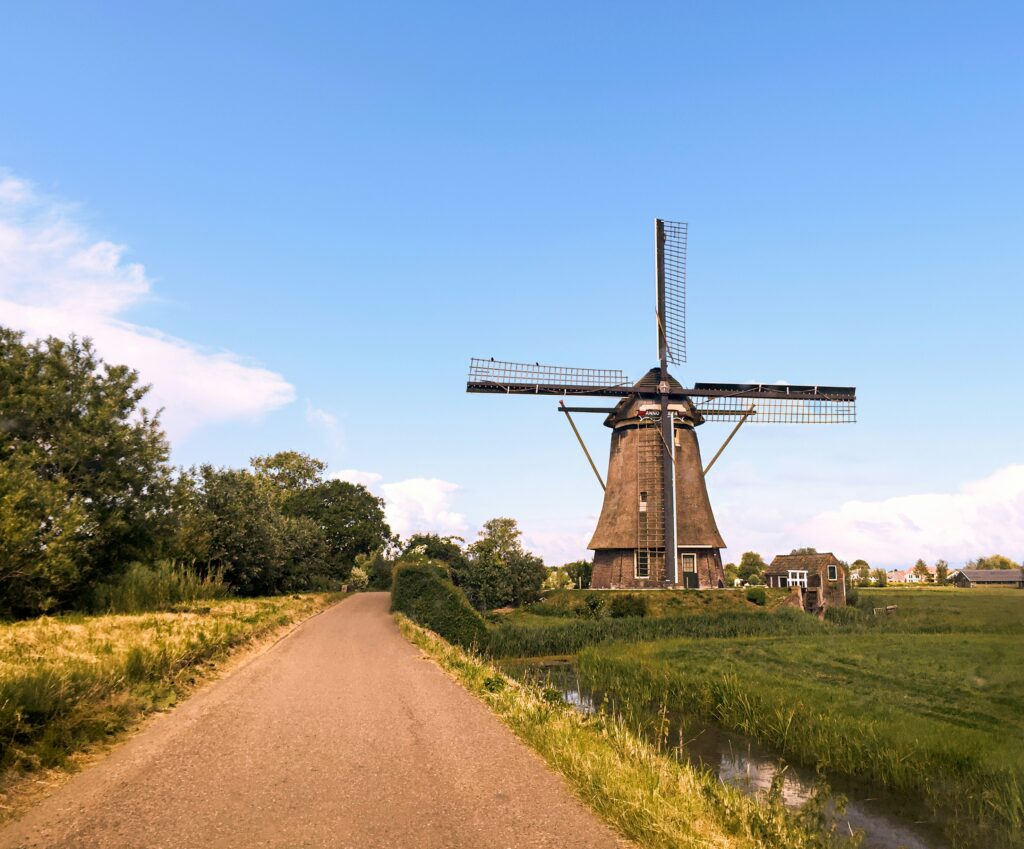
Most importantly, don’t rush. The Netherlands is a relatively small country, which means you’re rarely driving for hours without a break. If you pass an interesting village, a traditional windmill or a local café, take the opportunity to stop. Those unexpected moments often become the most memorable part of a trip.
Renting a car gives you the freedom to discover places that many visitors never see. With the right preparation, a clear understanding of the rental process and a little confidence behind the wheel, you’ll be able to explore the Netherlands comfortably and at your own pace.
Frequently Asked Questions About Renting a Car in the Netherlands
Yes. Visitors from many countries can simply use their valid driver’s license to rent and drive a car in the Netherlands. However, it’s always a good idea to check the latest requirements before you travel, especially if your license isn’t written in the Latin alphabet. Some travelers may also need an International Driving Permit.
Not at all. Most visitors find driving in the Netherlands easy. Roads are well maintained, traffic signs are clear and navigation apps work very well. The biggest adjustment for many drivers is sharing the road with cyclists, especially in city centres. Paying attention at intersections and when opening your car door is usually enough to avoid problems.
Most roads in the Netherlands are completely free to use. Unlike several other European countries, you don’t need to buy a vignette or pay motorway tolls for normal passenger cars.
There are a few exceptions. Certain tunnels or special routes charge a toll, but most visitors won’t encounter them during a typical holiday. If you do, the route is clearly signposted in advance.
That depends on where you are. Parking in villages and smaller towns is often free or relatively inexpensive. In popular city centres, especially Amsterdam, parking can be quite expensive. If you’re visiting a large city for the day, using a Park and Ride (P+R) facility is often the most affordable option.
If you’re comfortable driving a manual transmission, you’ll usually have more choice and often pay a little less. If you only drive automatic, book as early as possible. Automatic cars are available, but demand is much higher than the supply during busy travel periods.
In most cases, yes. Many rental companies allow you to cross the border into neighbouring countries. However, you should always check the rental conditions before booking, as some companies charge an additional fee or require advance permission.
Children must travel in an appropriate child seat or booster seat until they are tall enough to use the regular seat belt safely. Most rental companies offer child seats as an optional extra. Because availability is limited during busy periods, it’s best to reserve one when you book your car.
Traffic fines are normally sent to the rental company first. They will then forward the fine to you or charge the amount to the payment method linked to your booking. In many cases, an additional administration fee is added for processing the fine.
Fuel prices in the Netherlands are generally higher than in many other countries. Prices also vary from one station to another. Fuel stations along motorways are often more expensive than those in towns or villages, so if you have the opportunity, it can be worth filling up before joining the motorway.
Booking in advance is usually the best approach, especially if you’re travelling during spring or summer. Comparing different rental companies before making a reservation helps you find the best balance between price, insurance and rental conditions. Rather than choosing the cheapest option straight away, take a moment to compare what’s actually included so there are no surprises when you collect your car.