The itinerary at a glance
🚗 Route: Amsterdam → Zaanse Schans & Volendam → Utrecht → Henschotermeer → Veluwe → Efteling → Giethoorn → Kinderdijk → Rotterdam → Dutch Coast
| 📅 Duration | 10 days |
| ☀️ Best season | Summer (June–August) |
| 👨👩👧👦 Best for | Families with kids of all ages |
| 🚗 Transportation | Rental car recommended |
| 🏨 Accommodation | Stay in 4 different regions to reduce driving |
| ⭐ Highlights | Amsterdam, Efteling, Giethoorn, Kinderdijk, Utrecht & the Veluwe |
| 🌊 Includes | Cities, beaches, nature, theme parks and historic villages |
| 🚘 Total driving | Short daily drives (usually under 2 hours) |
| 💰 Budget | $$–$$$ |
| 💡 Perfect if you… | Want to see the Netherlands’ highlights without rushing from place to place |
Planning a family holiday can be exciting, but it can also feel overwhelming. If this is your first time visiting the Netherlands, you might already have a long list of places you want to see. Amsterdam, windmills, canals, tulip fields, Giethoorn, beaches, castles and theme parks all look incredible, but fitting everything into one trip isn’t easy. Here you find the perfect 10 day Netherlands itinerary with kids for summer!
The good news is that the Netherlands is much smaller than many visitors expect. Distances between major attractions are surprisingly short, making it possible to experience a huge variety of places in just ten days. You can spend the morning exploring a lively city, have lunch in a historic village and end your afternoon relaxing on a sandy beach or cycling through a peaceful forest.
That variety is one of the reasons we love recommending the Netherlands to families. Every day feels different. One day you’re sailing through quiet canals, the next you’re watching your children race through a fairy tale theme park or building sandcastles beside a clear freshwater lake. Even relatively short drives often take you through completely different landscapes.
This itinerary has been designed for families who want more than simply ticking famous attractions off a list. Of course you’ll visit places like Amsterdam, Giethoorn and Kinderdijk because they truly deserve their reputation. But you’ll also discover places that many international visitors completely overlook. Some of our favourite family memories have been made in destinations that rarely appear in standard travel guides.
Rather than spending every night in a different hotel, this route also keeps travelling comfortable. Children generally enjoy holidays much more when they aren’t constantly packing suitcases and sitting in the car for hours. Most driving days are manageable, leaving plenty of time to explore, play and simply enjoy being together.
Whether you’re travelling with toddlers, school-aged children or teenagers, this itinerary offers a balance between sightseeing and relaxing. Museums are mixed with playgrounds, historic cities with beaches, and busy attractions with quiet nature. That balance keeps the holiday enjoyable for both children and parents.
If you have exactly ten days, we think this route offers one of the best introductions to the Netherlands.
Why summer is the best time to visit the Netherlands with kids
Every season has something special to offer in the Netherlands, but summer is the easiest time to travel with children. Attractions are fully open, playgrounds are busy, outdoor cafés fill with families and almost every town feels alive.
One of the biggest surprises for many visitors is how much time you have each day. Around June and early July, the sun doesn’t set until around 10 PM. Even in August, daylight lasts much longer than many American families expect. That means there’s no need to rush through your schedule. You can enjoy breakfast at your hotel, spend a relaxed morning exploring a city, stop for lunch without watching the clock and still have several hours left in the evening.
Those long evenings completely change the atmosphere. Parks stay busy, children continue playing outside, restaurant terraces remain full and many families take evening walks after dinner. If you’ve never experienced a European summer, it’s something you’ll probably remember long after your holiday ends.
Summer also transforms many places that can feel quiet during colder months. Dutch beaches become lively destinations filled with families, colourful beach clubs and children flying kites or digging enormous sandcastles. National parks look greener than ever, outdoor markets appear in many towns and festivals are organised almost every weekend.
For children, this is easily the most enjoyable season. They can climb, swim, cycle, play and explore without constantly needing jackets or umbrellas.
Is the Netherlands hot in summer?
This is one of the questions we see most often.
Many visitors imagine the Netherlands as a country where it’s always cool, windy and rainy. While Dutch weather can certainly be unpredictable, that image no longer tells the whole story.
Over the last several years, summers have become noticeably warmer. Temperatures above 25°C (77°F) are now very common throughout July and August. Some summers include multiple days above 30°C (86°F), and occasional heatwaves are no longer unusual.
That doesn’t mean every day will be hot.
One of the unique things about Dutch weather is how quickly it can change. You may spend one afternoon swimming in shorts and T-shirts, while the following morning feels cool enough for a light sweater. Local families are very used to this and rarely leave home without checking the weather forecast.
For travellers, this simply means packing a little more variety. Lightweight clothing is perfect for most days, but bringing a thin rain jacket and an extra layer means you’ll be comfortable whatever the weather decides to do.
The warmer temperatures have also changed how Dutch families spend their summers. Beaches are busier than ever, outdoor swimming lakes become popular meeting places and nature reserves fill with cyclists and hikers. Places like Henschotermeer, which we’ll visit later in this itinerary, have become favourite summer destinations for Dutch families looking to cool down without travelling abroad.
Should you rent a car?
For this itinerary, our answer is simple. Yes. The Netherlands has one of Europe’s best public transport systems. If your holiday only included Amsterdam, Rotterdam and Utrecht, trains would be more than enough.
This itinerary is different.
You’ll visit villages, beaches, forests and lakes that are much easier to reach by car. Having your own vehicle also gives you complete flexibility. If your children discover a playground they don’t want to leave, you can simply stay longer. If the weather suddenly becomes perfect for swimming, you can change your plans without worrying about train schedules.
Driving in the Netherlands is generally straightforward. Roads are well maintained, distances are short and traffic outside the largest cities is usually relaxed.
Another advantage is luggage. Families travelling with younger children often bring strollers, toys, extra clothes and picnic supplies. Having everything in the car makes every day much easier.
Parking in city centres can be expensive, particularly in Amsterdam. That’s why we recommend staying just outside the historic centre if you’re travelling by car. Many hotels offer parking, while public transport makes reaching the city centre simple.
Once you leave Amsterdam, driving becomes one of the easiest parts of the holiday. In this article we discuss everything you need to know about renting a car in the Netherlands.
Where should you stay?
Instead of changing hotels every single day, we recommend splitting your trip into four regions.
Spend your first three nights around Amsterdam. This gives you enough time to explore the capital while also visiting Zaanse Schans and Volendam without constantly checking in and out of hotels.
Next, move towards Utrecht for two nights. This location is perfect for visiting both Utrecht itself and Henschotermeer, while also providing easy access to the Veluwe the following day.
Your third base should be somewhere near the Efteling or Rotterdam. Depending on your preferences, you can either stay close to the theme park or choose Rotterdam as your base for two nights.
Finish your holiday in the northern part of the country or return towards Amsterdam, depending on your departure airport and flight time.
Changing hotels four times during a ten-day holiday strikes a good balance. It keeps driving manageable while avoiding the stress of packing every morning.
Day 1 – Arrive in Amsterdam
After landing at Schiphol Airport, it’s tempting to immediately start sightseeing. We actually recommend doing the opposite.
International flights can be exhausting, especially for younger children. Between immigration, collecting luggage and picking up a rental car, several hours have often passed before you even reach your hotel. Trying to fit a packed sightseeing schedule into the same day usually leaves everyone tired.
Instead, keep your first day simple.
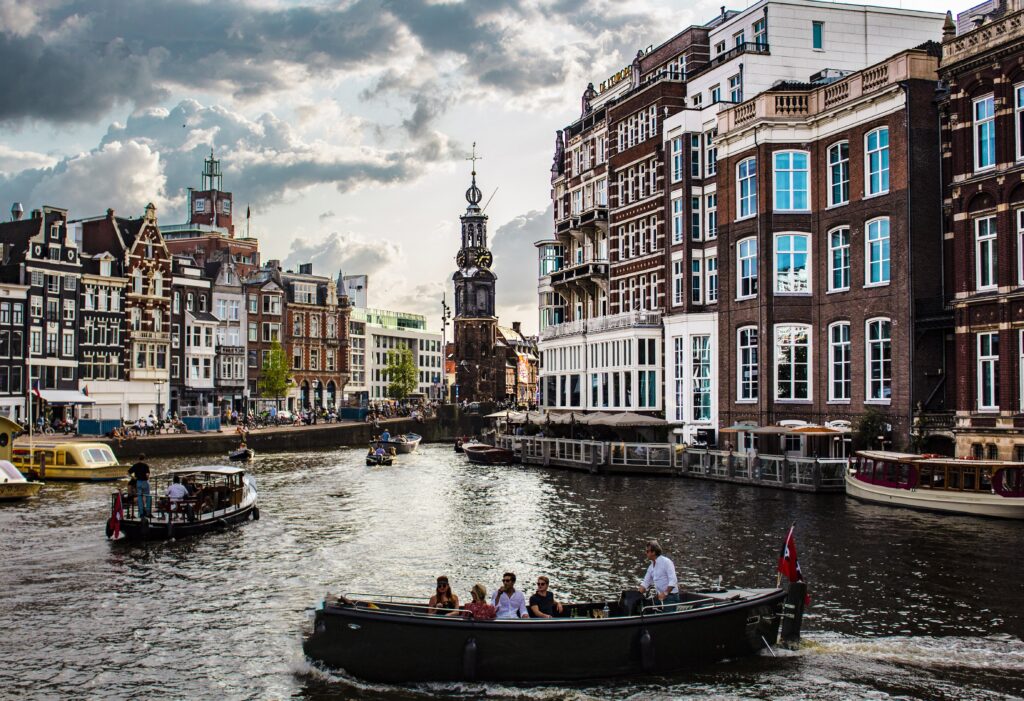
Once you’ve checked into your hotel, head into the city centre and allow yourselves to explore without a strict plan. One of the nicest things about Amsterdam is that you don’t need an itinerary to enjoy it. Simply wandering through the narrow streets, crossing small bridges and watching boats glide through the canals already feels like an experience.
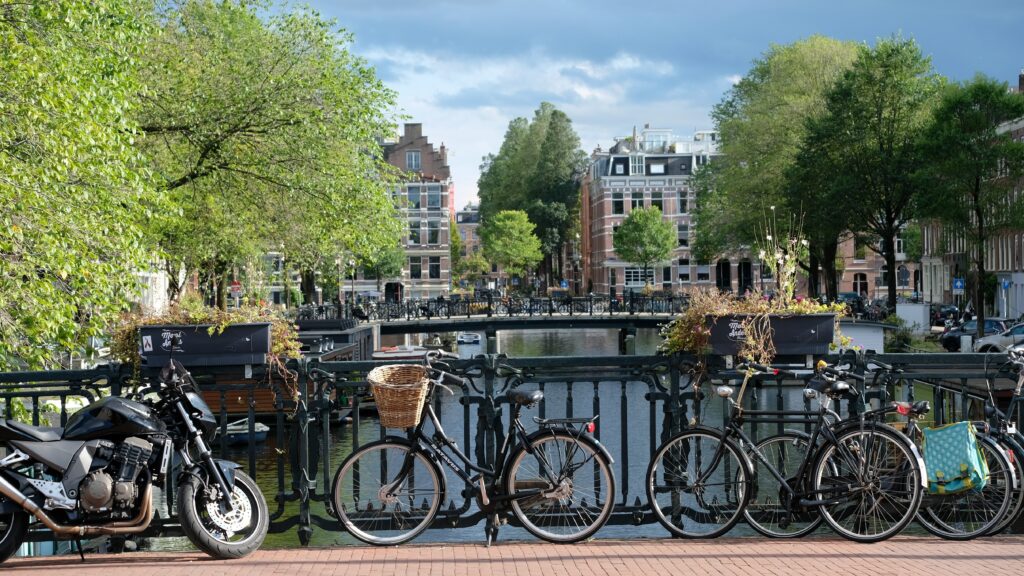
Children often enjoy spotting all the bicycles. It quickly turns into a game of counting colourful bikes, cargo bikes and people somehow balancing impossible amounts of groceries while cycling.
Take your time walking through the canal district. Stop whenever something catches your attention. Buy an ice cream, watch the boats pass beneath the bridges or find a small playground if the children need to burn off some energy after the flight.
If everyone still feels awake, end your first evening with a canal cruise.
We usually recommend doing this on the first or second day because it immediately helps you understand the layout of Amsterdam. Looking up at the tall canal houses from the water offers a completely different perspective than walking through the streets.
As the evening light reflects on the canals, it’s easy to understand why Amsterdam is considered one of Europe’s most beautiful cities.
Don’t worry about seeing everything today.
You have another full day tomorrow.
Day 2 – Explore Amsterdam with Kids
After a good night’s sleep, it’s time to properly discover Amsterdam. Although the city is famous for its museums, canals and historic buildings, it’s also surprisingly family-friendly. You certainly don’t have to spend an entire day walking through museums to enjoy Amsterdam with children.
Start your morning early, especially if you’re visiting during the summer holidays. Amsterdam becomes much busier after 10 AM, particularly around the central canals. An early start allows you to experience the city while it’s still relatively quiet, and temperatures are usually more comfortable on warm summer days.
One of our favourite places for families is NEMO Science Museum. Even children who normally aren’t interested in museums usually have a fantastic time here. Instead of quietly looking at displays, they’re encouraged to touch, build, experiment and discover how things work. Younger children love the water experiments and hands-on activities, while older kids can easily spend hours exploring the different floors.
Don’t try to rush through the museum. It’s much more enjoyable if you let your children choose what interests them. You’ll probably spend longer here than you originally planned, and that’s perfectly fine.
Before leaving, head up to the rooftop terrace. Even if you don’t visit the museum itself, the rooftop is worth seeing. During summer, children can play with water features while parents enjoy one of the best panoramic views over Amsterdam.
After lunch, it’s time to slow the pace.
Vondelpark is only a short distance away and offers exactly what many families need after a busy morning. While adults often appreciate the peaceful walking paths and beautiful trees, children usually head straight for one of the playgrounds.
One thing we always notice in Dutch parks is how relaxed they feel. Families picnic on the grass, children play freely and people spend hours simply enjoying the outdoors. If the weather is warm, don’t be surprised to see children running through fountains or enjoying ice creams while cyclists quietly pass by.
Summer in Amsterdam isn’t only about sightseeing. It’s also about enjoying everyday Dutch life.
Spend the rest of the afternoon wandering through neighbourhoods like the Jordaan. Rather than following a strict route, simply cross bridges, browse small shops and stop at cafés whenever something looks inviting.
One of the best memories you’ll probably take home won’t be a famous landmark. It might simply be sitting beside a canal with an ice cream while boats quietly pass by.
If your family still has energy in the evening, this is a wonderful time to enjoy dinner on a canal-side terrace. The atmosphere completely changes as locals finish work and the city slowly fills with people enjoying the long summer evening.
Day 3 – Windmills, Cheese and Fishing Villages
Today you’ll experience the Netherlands that many people imagine before they arrive.
Think traditional windmills, green wooden houses, cheese farms, fishing boats and beautiful harbour views.
Although these destinations are very popular, there’s a good reason for that. They really are worth visiting.
We recommend leaving Amsterdam relatively early. Zaanse Schans becomes considerably busier later in the morning, particularly during July and August.
As you arrive, the first thing you’ll notice is the smell of fresh grass mixed with the sound of slowly turning windmills. It almost feels like stepping into a painting.
Children usually love watching the giant sails turning in the wind. Many of the historic windmills can still be visited, giving families a fascinating look at how they once produced paint, spices, oil and timber.
Although adults often appreciate the history, younger children usually enjoy something much simpler.
They love watching the wooden shoe demonstrations.
Seeing large blocks of wood transformed into traditional Dutch clogs within minutes is surprisingly entertaining. Even teenagers who expected it to be boring often end up watching the entire demonstration.
Another stop that families rarely skip is one of the cheese farms. Besides tasting different Dutch cheeses, children can often see how cheese is traditionally made. Staff members are usually happy to explain the process and answer questions.
One thing we always recommend is not trying to visit every single building.
Zaanse Schans isn’t a theme park where you need to tick off every attraction. Instead, take your time walking along the river, enjoying the views and letting the children explore. The scenery itself is one of the biggest highlights.
After lunch, continue towards Volendam.
The drive only takes around twenty minutes, making it a very easy combination for one day.
Volendam has a completely different atmosphere from Amsterdam.
Instead of canals lined with tall houses, you’ll find colourful fishing boats, seafood restaurants and a lively harbour filled with families.
One of the nicest things about Volendam is that it’s incredibly easy to explore.
Children can safely walk along the promenade while watching boats arrive and leave. There are plenty of places to stop for ice cream, pancakes or fresh Dutch fries, making this one of the easiest destinations for families with younger children.
If your children enjoy boat trips, consider taking the short ferry across to Marken.
The crossing only takes around thirty minutes, but it adds another memorable experience to the day. Marken feels much quieter than Volendam and offers another glimpse into traditional Dutch village life.
If you’d rather stay in Volendam, that’s perfectly fine too.
Sometimes it’s much nicer to sit on the harbour with an ice cream, watch people pass by and simply enjoy the relaxed atmosphere than trying to squeeze in another destination.
By the end of today, you’ll probably understand why these villages remain some of the most photographed places in the Netherlands.
Yes, they’re popular.
But unlike some tourist attractions around the world, they genuinely live up to the expectations.
Tomorrow, however, we’ll leave the busiest tourist trail behind and head towards one of our favourite parts of the country.
Many international visitors never make it there, but we think they should.
Day 4 – Utrecht and Henschotermeer
After two busy days around Amsterdam, today feels completely different.
Instead of crowds and famous landmarks, you’ll discover a slower side of the Netherlands. Utrecht is one of our favourite cities for families because it has much of Amsterdam’s charm without feeling quite as overwhelming.
Many Dutch people will even tell you that Utrecht is their favourite city in the country.
That may sound surprising, but once you arrive, it’s easy to understand why.
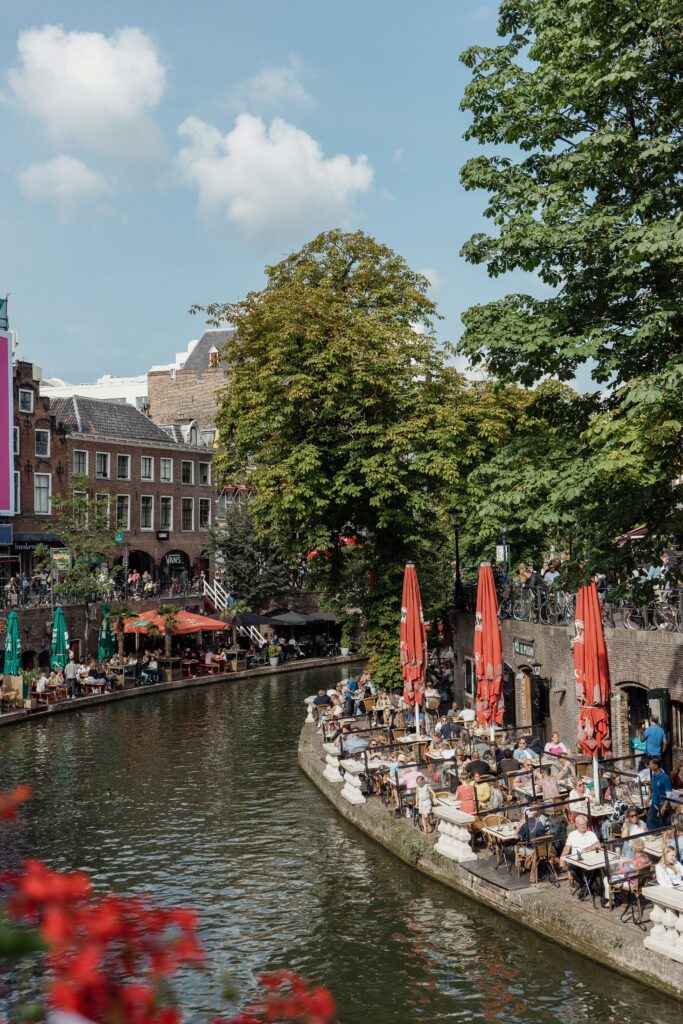
The historic centre is compact, making it perfect for exploring on foot with children. Cars play a much smaller role here than in many other cities, so walking around feels relaxed. The canals are beautiful, but unlike Amsterdam, many cafés and restaurants sit directly beside the water on old wharf terraces. It creates an atmosphere that’s completely unique in the Netherlands.
Start your morning with a walk along the Oudegracht.
There is no need to follow a strict route. Wander through narrow streets, cross little bridges and enjoy the fact that almost every corner looks picture-perfect. Utrecht rewards slow travel. The city isn’t about rushing from one attraction to another. It’s about discovering hidden courtyards, finding a small bakery and watching boats glide quietly through the canals.
Children often enjoy climbing the small bridges and looking down at the boats below. If they’re old enough, you could also take a short canal cruise. Seeing Utrecht from the water offers a completely different perspective and is usually less crowded than canal cruises in Amsterdam.
Around lunchtime, choose one of the many cafés along the canal. Sitting beside the water while people paddle past in canoes is one of the simple pleasures that makes Utrecht so enjoyable in summer.
After lunch, it’s time for something completely different.
Drive about thirty minutes to Henschotermeer.
If you’ve never heard of it before, you’re not alone.
Most international visitors drive straight past this beautiful lake without realising it exists. Yet on warm summer days, it’s one of the most popular places for Dutch families.
The first thing you’ll notice is the soft white sand.
It almost looks like a beach, except you’re surrounded by tall pine trees instead of the sea. The clear water is shallow near the shore, making it an excellent place for younger children to splash around safely while older kids swim further out.
Bring your swimwear.
If the weather is warm, this is one of those places where you’ll almost certainly end up staying longer than planned.
Families spread out picnic blankets beneath the trees, children build sandcastles, teenagers play volleyball and parents finally get a chance to relax for a while.
One thing we particularly like about Henschotermeer is that it doesn’t feel overly commercial. There are facilities nearby, but nature remains the main attraction.
If you’re visiting during a hot spell, arriving later in the afternoon can actually be a great idea. Many local families head home around dinner time, leaving the lake much quieter.
After several days of sightseeing, spending an afternoon doing absolutely nothing can feel surprisingly refreshing.
That’s exactly why we included Henschotermeer in this itinerary.
A family holiday shouldn’t feel like a race.
Sometimes the best memories are made on days when there isn’t much of a schedule at all.
Day 5 – Discover the Veluwe
Today you’ll discover a side of the Netherlands that many visitors never expect.
When people think about the country, they usually picture canals, windmills and colourful tulip fields.
Few realise that the Netherlands is also home to vast forests, heathlands, drifting sand dunes and some of the country’s most beautiful cycling routes.
Welcome to the Veluwe.
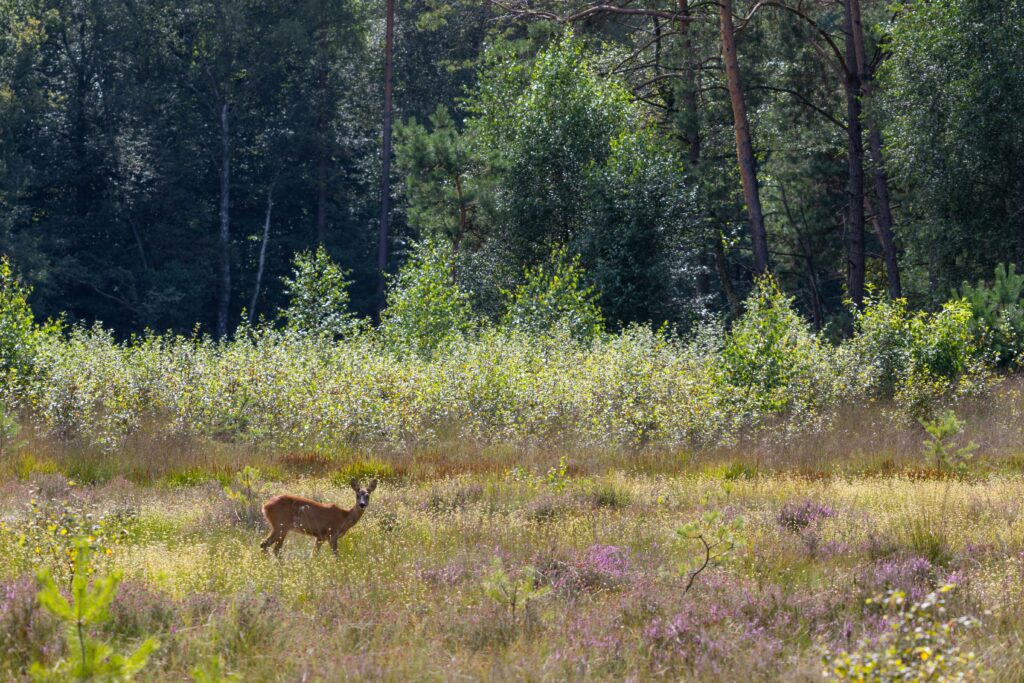
This enormous nature area is one of the best places to slow down and enjoy the outdoors.
If your family enjoys hiking, cycling or simply escaping busy cities for a day, this could easily become one of the highlights of your trip.
We recommend arriving relatively early, especially during summer weekends.
The morning is usually cooler, wildlife is more active and many walking and cycling paths are still wonderfully quiet.
One of the nicest ways to explore the Veluwe is by bicycle.
The Netherlands is famous for cycling, and nowhere does it feel more natural than here. Wide, well-maintained cycle paths lead through forests, across open heathlands and past peaceful clearings where children can safely ride ahead.
Unlike cycling in busy cities, there’s very little traffic to worry about.
Instead, you’ll hear birds singing, leaves moving in the wind and perhaps the occasional woodpecker somewhere in the trees.
If you’re lucky, you may even spot wildlife.
Wild boar, red deer and foxes all live in the Veluwe, although seeing them requires a little patience and a bit of luck. Early mornings and evenings usually offer the best chance.
Even if you don’t see any large animals, children often enjoy turning the day into a wildlife adventure.
Who can spot the first rabbit? Who finds the biggest pine cone? Who discovers the most unusual mushroom?
It’s these little games that often keep younger children interested while walking through nature.
Another thing we appreciate about the Veluwe is how many places invite you to stop.
You’ll find picnic tables hidden among the trees, open spaces where children can run freely and countless peaceful spots to simply enjoy the scenery.
Pack a small picnic if you can.
Lunch always seems to taste better when you’re surrounded by nature.
Families with older children may also enjoy visiting the Kröller-Müller Museum, famous for its impressive art collection and sculpture garden.
However, if you’re travelling with younger children, we honestly wouldn’t feel pressured to include it.
The Veluwe itself is already the attraction.
Sometimes a day spent cycling, playing and exploring creates stronger family memories than visiting another museum.
As the afternoon comes to an end, continue your journey towards your accommodation near the Efteling.
Tomorrow promises to be one of the most exciting days of the entire trip.
For many children, it’s the day they’ve secretly been waiting for since the holiday began.
Day 6 – A Magical Day at Efteling
Ask almost any Dutch child about their favourite theme park, and there’s a good chance they’ll mention Efteling before anywhere else.
While many international visitors automatically think of Disneyland Paris, Efteling offers something completely different. It feels less like a collection of rides and more like stepping into a storybook. Fairy tales, forests, castles and beautifully designed attractions create an atmosphere that appeals to both young children and adults.
Even if your family has visited large theme parks before, don’t expect Efteling to feel the same.
The attention to detail is remarkable. Every pathway, garden and building seems carefully designed, making the entire park enjoyable to explore rather than simply moving from one ride to another.
We recommend arriving before opening time.
Summer is one of the busiest periods of the year, and entering early allows you to enjoy several popular attractions before queues become longer. If you’re staying nearby, getting there early is usually very easy.
One mistake many families make is trying to see absolutely everything in one day.
Unless you’re visiting during a very quiet period, that’s almost impossible.
Instead, choose the attractions your family is most excited about and leave enough time to enjoy the atmosphere. Children usually remember the magical moments far more than the number of rides they managed to fit into the day.
For younger children, the Fairytale Forest is often the highlight.
Walking through the forest almost feels like entering the pages of a classic fairy tale book. Familiar stories come to life through moving scenes, castles and beautifully landscaped gardens. Even parents often find themselves slowing down here because there is so much to admire.
Older children and teenagers will probably head straight towards the larger roller coasters.
The great thing about Efteling is that the park offers something for every age. Families rarely need to split up because there are plenty of attractions that everyone can enjoy together.
When lunchtime arrives, don’t feel rushed.
Find a quiet place to sit down, enjoy a proper break and let everyone recharge before continuing. Theme parks can be surprisingly tiring, especially on warm summer days.
Remember to drink plenty of water.
Although the Netherlands isn’t known for extreme heat, summer temperatures above 30°C (86°F) are becoming increasingly common. Shade can sometimes be limited while walking through the park, making regular breaks even more important.
One thing we particularly appreciate about Efteling is how green it feels.
Unlike some amusement parks where concrete dominates the landscape, Efteling has mature trees, lakes and beautifully maintained gardens throughout the park. Even when it’s busy, there are plenty of quiet corners where you can escape the crowds for a while.
If you’re visiting during July or August, check the closing time before your visit.
Summer evenings are especially magical. As daylight slowly disappears, many areas of the park become beautifully illuminated, creating an atmosphere that’s completely different from earlier in the day.
Leaving the park after sunset is often the perfect ending to what many families consider the highlight of their Dutch holiday.
Day 7 – Giethoorn: The Village with Almost No Roads
Today you’ll travel north to one of the most famous villages in the Netherlands.
Giethoorn is often called the “Dutch Venice,” although we think that comparison doesn’t quite do it justice. The village has its own unique character, and nowhere else in the country feels quite the same.
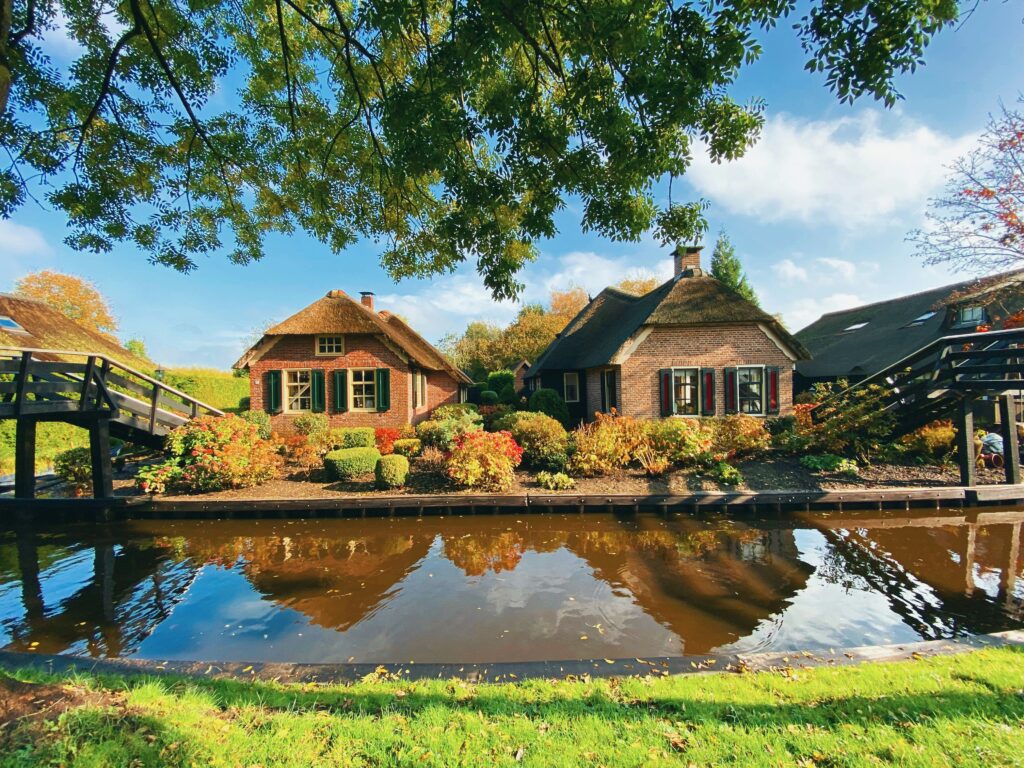
The first thing you’ll notice is how peaceful everything seems.
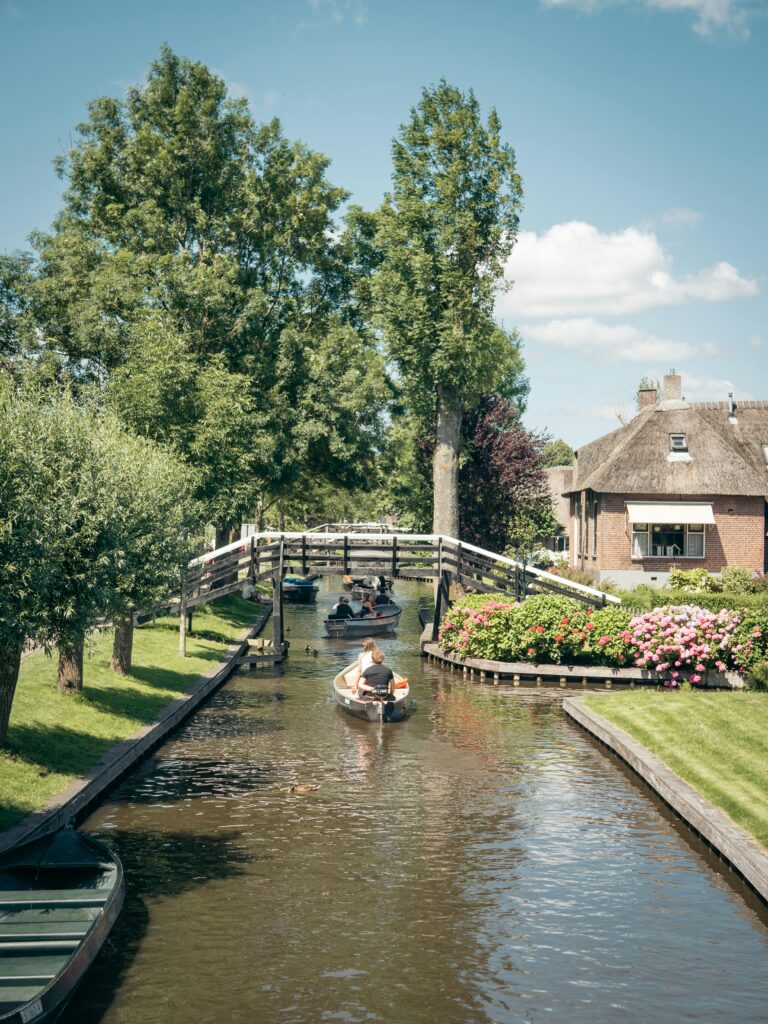
Instead of busy roads, you’ll find narrow canals winding between traditional thatched cottages. Small wooden bridges connect different parts of the village, while boats quietly glide past flower-filled gardens.
Cars are kept largely outside the historic centre, which immediately creates a much calmer atmosphere.
Although walking through Giethoorn is lovely, we strongly recommend renting a whisper boat.
It isn’t just another tourist activity.
It’s the best way to experience the village.
These small electric boats are easy to operate, even if you’ve never driven one before. Within a few minutes you’ll be slowly cruising through narrow canals, waving at other families and discovering beautiful corners that aren’t visible from the walking paths.
Children usually love helping steer the boat.
Even younger kids often become completely absorbed in spotting ducks, counting bridges or watching fish swimming beneath the clear water.
Take your time.
This isn’t the place to rush.
Some visitors try to finish Giethoorn in two hours before driving to another attraction. We think that’s a shame.
Instead, spend several hours enjoying the relaxed atmosphere. Bring snacks, stop whenever you find a beautiful spot and simply enjoy being on the water together.
After returning your boat, continue exploring on foot.
Small walking paths lead past picturesque cottages, colourful gardens and tiny canals that look almost too beautiful to be real.
Every few minutes you’ll probably stop to take another photo.
Fortunately, that’s perfectly normal.
If the weather is particularly warm, consider ending the afternoon near one of the nearby swimming areas outside the village. Several lakes in the region are popular with Dutch families during summer, offering another opportunity for children to cool down before continuing your journey.
Spend the night somewhere nearby or continue towards Rotterdam, depending on how you’ve planned your accommodation.
Tomorrow you’ll discover one of the country’s most famous UNESCO World Heritage Sites before ending the day in the Netherlands’ most modern city.
Day 8 – Kinderdijk and Rotterdam
Few places represent the Netherlands as perfectly as Kinderdijk.
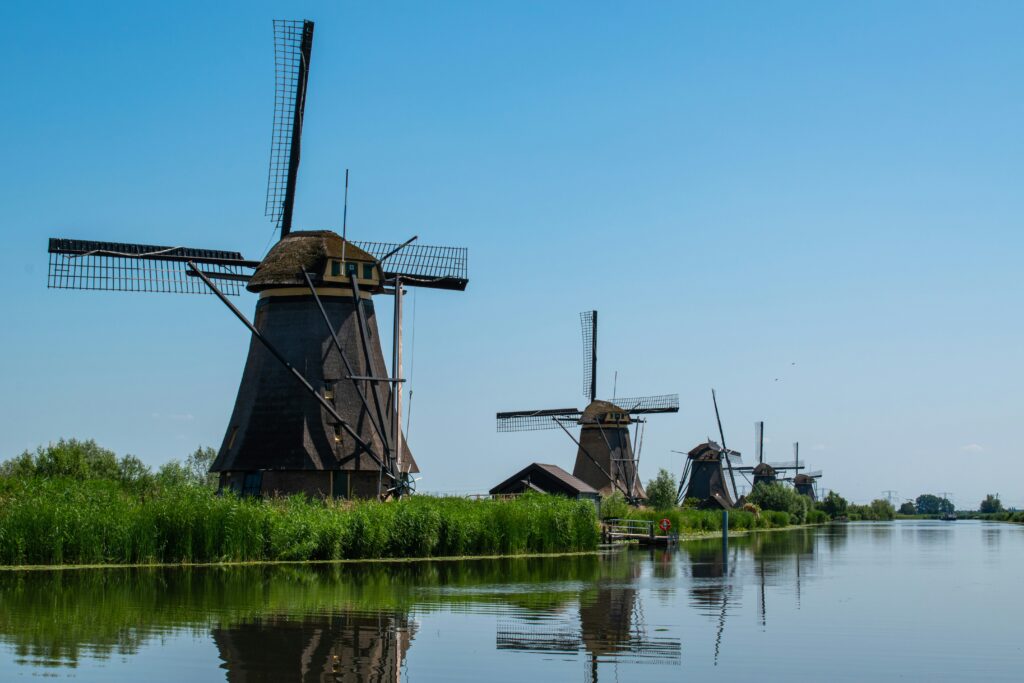
If someone asked us to choose one landscape that captures the country’s history, this would probably be it.
Nineteen historic windmills stand beside quiet canals, surrounded by green meadows and endless Dutch skies.
It almost feels exactly as people imagine the Netherlands before they arrive.
We recommend arriving early in the morning.
Not only is it cooler during summer, but the soft morning light also makes the windmills even more beautiful. Before the larger tour groups arrive, the paths feel wonderfully peaceful.
There are several ways to explore Kinderdijk.
Walking is the easiest option, but renting a bicycle allows you to cover more of the area while enjoying the open countryside. Boat tours are another excellent choice, especially for families who prefer a more relaxed visit.
Don’t rush through your time here.
Many visitors spend only an hour taking photographs before leaving again.
We think Kinderdijk deserves more than that.
Take time to walk beside the canals, watch the reflections of the windmills in the water and imagine how these impressive structures helped protect the Netherlands from flooding for centuries.
Children are often fascinated when they discover that many of the windmills were once family homes.
It suddenly turns history into something much more real.
After lunch, continue to Rotterdam.
The contrast couldn’t be greater.
Where Kinderdijk feels peaceful and historic, Rotterdam is modern, energetic and full of striking architecture.
Instead of narrow canal houses, you’ll see bold skyscrapers, innovative buildings and one of Europe’s largest ports.
Some visitors even prefer Rotterdam to Amsterdam because it feels less crowded and more contemporary.
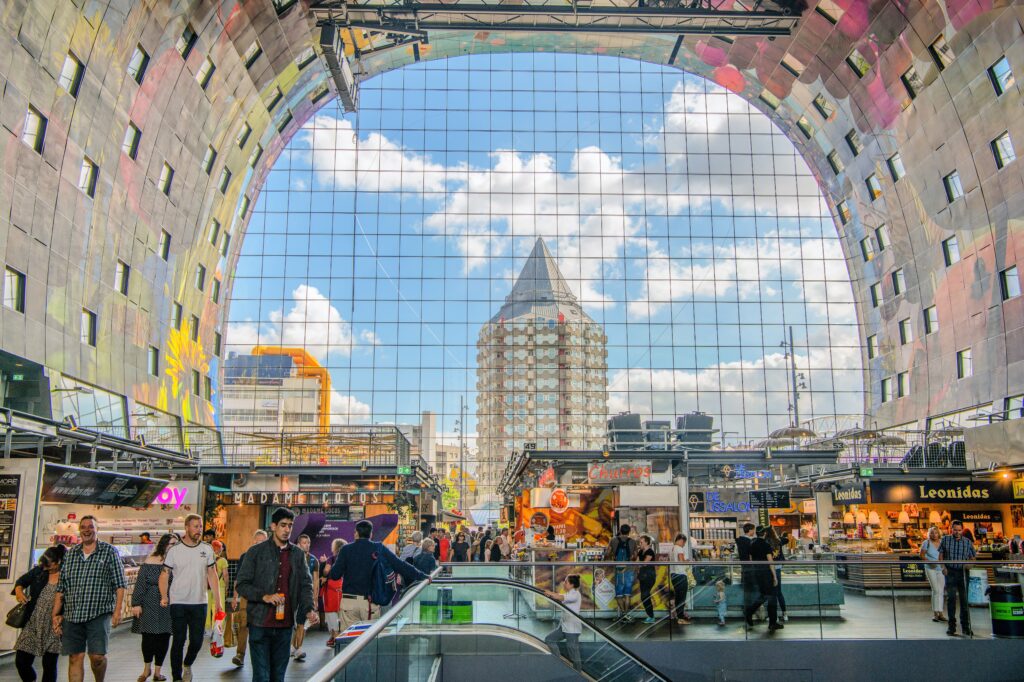
Spend the afternoon exploring the Cube Houses and the lively Markthal.
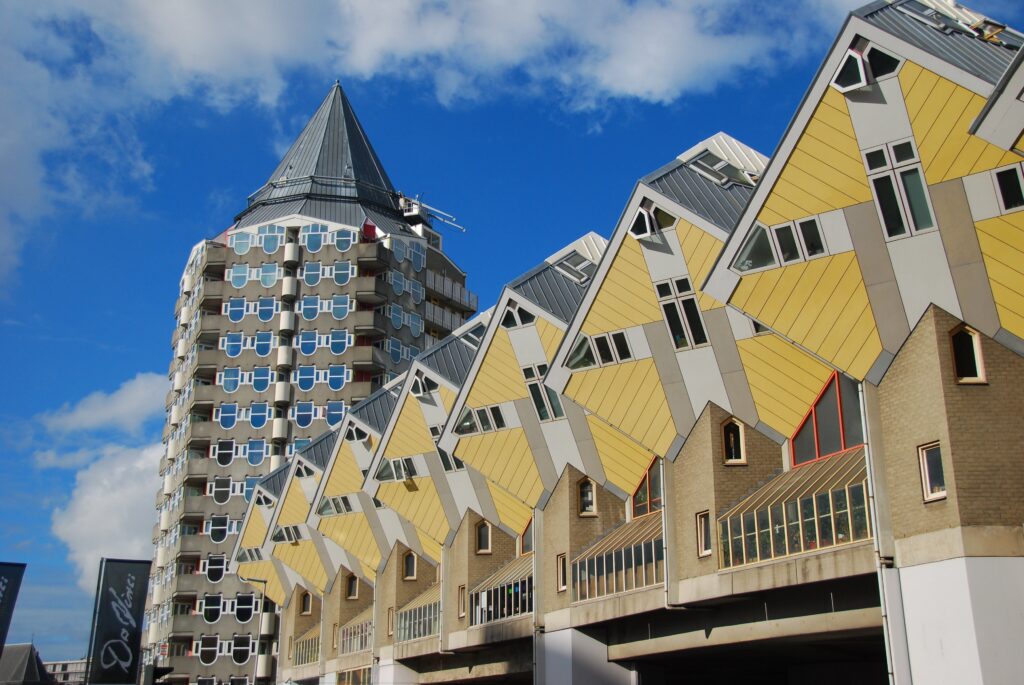
Even children usually enjoy walking through the enormous food hall, where colourful stalls sell everything from fresh fruit to Dutch pastries and international dishes.
If the weather is clear, finish the day with a visit to the Euromast.
The observation tower offers spectacular views across the city and the surrounding harbour. Looking down from the top, you’ll realise just how different Rotterdam is from every other Dutch city you’ve visited so far.
That contrast is exactly what makes this itinerary special.
In just over a week, you’ve experienced historic villages, peaceful forests, freshwater beaches, fairy tales, canals, windmills and one of Europe’s most modern skylines.
And there’s still one final day left to enjoy.
Day 9 – A Relaxing Beach Day
After several days filled with cities, museums, theme parks and sightseeing, today is all about slowing down.
One thing we always tell people planning their first trip to the Netherlands is that not every day has to be packed with attractions. In fact, most children enjoy holidays more when there’s a balance between exciting activities and time to simply play.
That’s exactly why we’ve included a beach day.
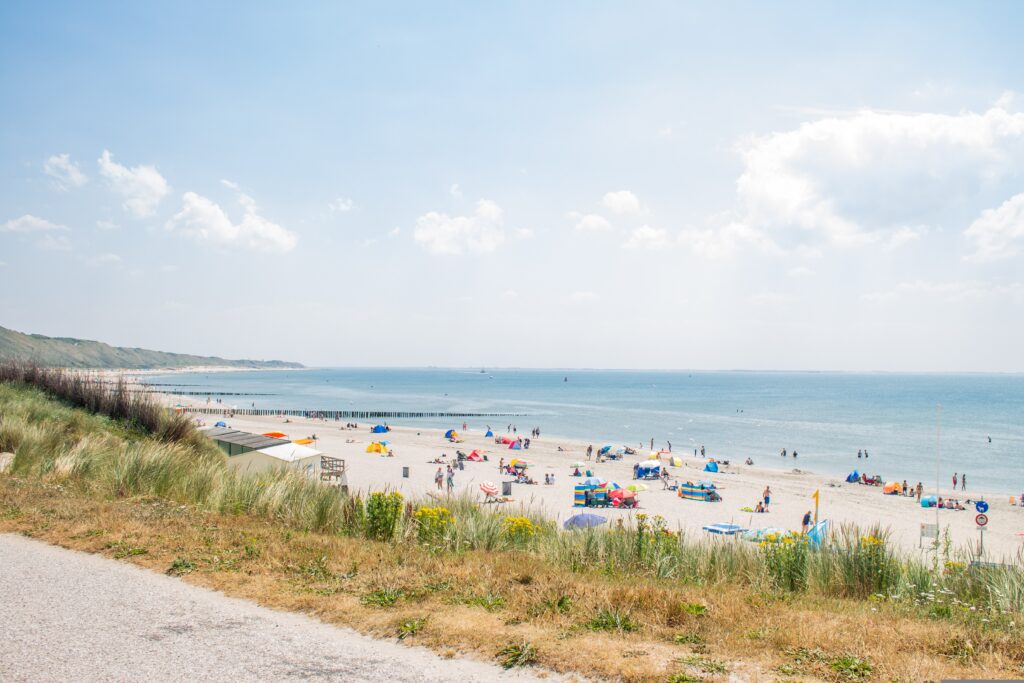
Many international visitors don’t realise how beautiful the Dutch coastline is. With more than 450 kilometres (280 miles) of coastline, the Netherlands has countless sandy beaches that become incredibly popular during summer.
On warm days, it almost feels as though the entire country heads towards the sea.
Depending on where you’re staying, you have several excellent options.
Scheveningen is probably the best-known beach in the Netherlands. It has a long promenade, a large pier, plenty of restaurants and countless places to buy ice cream or snacks. Families who enjoy a lively atmosphere will feel right at home here.
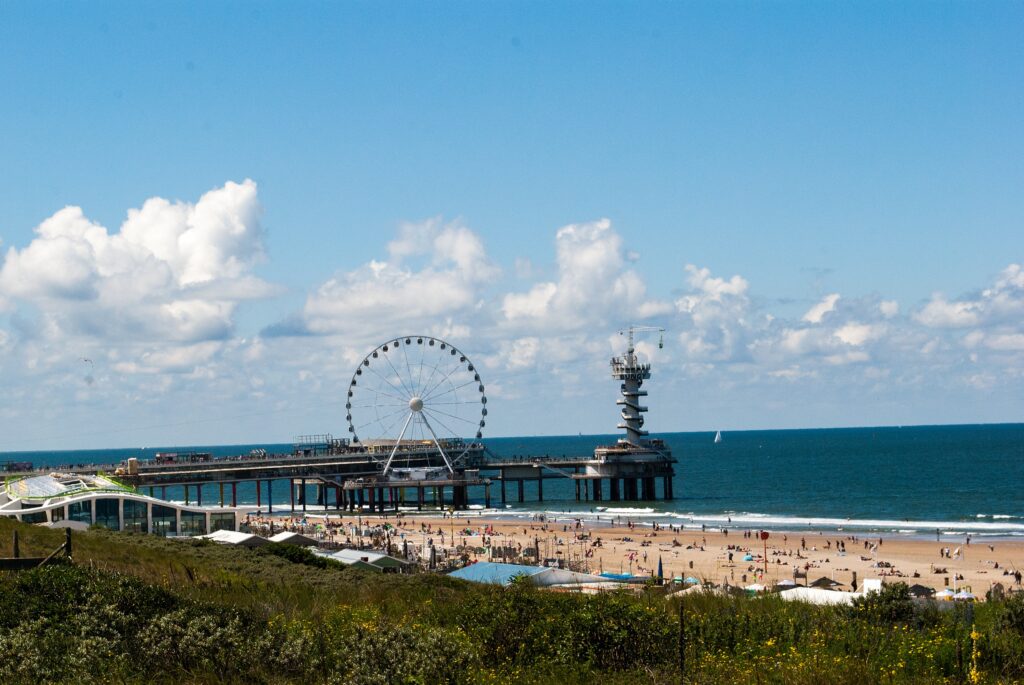
If you prefer something a little quieter, Zandvoort is another fantastic choice.
Although it’s also popular during summer, it generally feels more relaxed than Scheveningen. The beach stretches for miles, giving children endless space to run, dig and play.
One thing many visitors find surprising is how clean Dutch beaches are.
The sand is well maintained, there are plenty of facilities and you’ll often find playgrounds, beach clubs and cafés within walking distance.
If the weather is warm enough, don’t hesitate to spend several hours here.
Children rarely need organised entertainment when they have a bucket, a shovel and a wide sandy beach. Sometimes the simplest days become the ones they remember most.
Parents often appreciate the beach for another reason.
After days of walking through cities, this is finally an opportunity to sit back, enjoy a coffee or cold drink and watch the children play.
If you’re visiting during a heatwave, you’ll notice that Dutch beaches become extremely busy.
That’s completely normal.
Many Dutch families don’t travel abroad every summer, so when temperatures climb above 28°C (82°F), the coast quickly fills with people enjoying the sunshine.
Our advice is simple.
Arrive before 10 AM if possible.
You’ll find parking much more easily and can choose a great place on the beach before it becomes crowded.
Stay until late afternoon if you can.
As families slowly begin heading home, the atmosphere becomes quieter again. Watching the sun slowly sink towards the North Sea while children make one last trip to the water is a wonderful way to end your final full day in the Netherlands.
Day 10 – A Relaxed Farewell to the Netherlands
Today marks the end of your journey.
Depending on your flight time, you may still have a few hours to enjoy before returning to Schiphol Airport.
Rather than trying to squeeze in one final attraction, we recommend keeping things relaxed.
Find a local bakery for fresh croissants, enjoy one last Dutch coffee and take a final walk through a nearby park or town centre.
If you’re driving back towards Amsterdam, it’s worth leaving a little earlier than necessary. Dutch motorways are generally excellent, but traffic around the larger cities can become busy, especially during weekday mornings and late afternoons.
Returning your rental car at Schiphol is usually straightforward, but allowing extra time helps avoid unnecessary stress.
As your holiday comes to an end, you’ll probably realise just how much variety you’ve experienced in only ten days.
You’ve explored one of Europe’s most famous capitals.
You’ve wandered through traditional fishing villages.
You’ve cycled through forests.
You’ve sailed through canals in Giethoorn.
You’ve stood beside historic windmills.
You’ve relaxed on beautiful beaches.
You’ve spent a magical day in one of Europe’s most charming theme parks.
And perhaps most importantly, you’ve discovered that the Netherlands is far more diverse than many people expect.
Estimated Budget for a 10-Day Family Trip
One of the advantages of travelling through the Netherlands is that distances are short. That helps keep fuel costs relatively low compared to road trips in many other countries.
Accommodation will usually be the biggest expense.
During July and August, family hotels and holiday parks fill up quickly. Booking several months in advance not only gives you more choice but can also save a considerable amount of money.
Dining costs vary widely.
It’s easy to enjoy a relaxed lunch at a bakery or café without spending a fortune, while dinner in Amsterdam’s city centre is naturally more expensive.
Mixing restaurant meals with supermarket picnics is something many Dutch families do themselves and can make a noticeable difference to your overall budget.
For attractions, expect Efteling to be your largest expense, followed by museums and canal cruises.
Many of the itinerary’s highlights, however, cost very little.
Walking through Utrecht, exploring Volendam, cycling in the Veluwe or spending a day at the beach are experiences that don’t require large entrance fees.
That’s one of the things we appreciate most about travelling in the Netherlands.
Some of the country’s best memories are completely free.
Final Thoughts
We genuinely believe this itinerary offers one of the best introductions to the Netherlands for families visiting for the first time.
Rather than focusing only on famous tourist attractions, it combines everything that makes the country so enjoyable.
Historic cities, quiet villages, beautiful nature, exciting attractions and relaxing beaches all have their place.
The pace is intentional. There are busy days filled with sightseeing, but they’re balanced by quieter moments at Henschotermeer, in the Veluwe and along the Dutch coast. That variety keeps the trip enjoyable for both children and parents.
If there’s one piece of advice we’d give, it’s this: don’t try to see everything.
The Netherlands may be small, but it’s full of places worth discovering. Leave room for unexpected stops, longer lunches, extra playground visits and afternoons that don’t go according to plan.
Those unplanned moments often become the stories you’ll still be telling years later.
We hope this itinerary helps you create exactly those kinds of memories. Are you looking for more inspiration for your stay in the Netherlands? Find out the 25 Best things to do in the Netherlands with kids.
Have a wonderful trip to the Netherlands!
Frequently Asked Questions (FAQ)
Yes. Ten days gives you enough time to experience the country’s biggest highlights while also enjoying quieter destinations. You’ll never see everything, but this itinerary offers an excellent balance between sightseeing and relaxation without spending too much time in the car.
July and August are the busiest months, especially in Amsterdam, Giethoorn and at the Efteling.
However, starting your days early makes a huge difference. Popular attractions are generally much quieter before late morning, and evenings remain enjoyable thanks to the long daylight hours.
Absolutely. Roads are well maintained, driving distances are short and navigation is straightforward. For families, having a rental car offers much more flexibility than relying entirely on public transport, particularly when visiting places like the Veluwe and Henschotermeer.
Dutch weather is unpredictable.
Pack a lightweight rain jacket and continue exploring whenever possible. Museums, indoor attractions and cafés provide plenty of alternatives if the weather temporarily changes.
Compared with some European destinations, accommodation can be relatively expensive during summer.
On the other hand, fuel costs are low because driving distances are short, and many of the country’s most beautiful places—such as beaches, forests and historic villages—can be enjoyed for little or no costs.